SPOILERS follow for: Ted Lasso, The Sex Lives of College Girls, and Mythic Quest
The last month was some of the best TV-watching my wife and I have had in a while, a string of Station 11 (which I think is my favorite show I’ve seen since season 1 of True Detective), The Sex Lives of College Girls (SLOCG), and Ted Lasso. Today I want to pick apart why the show we’re watching now, Mythic Quest, feels so disappointing right now, especially when it is seemingly designed for someone exactly like me.
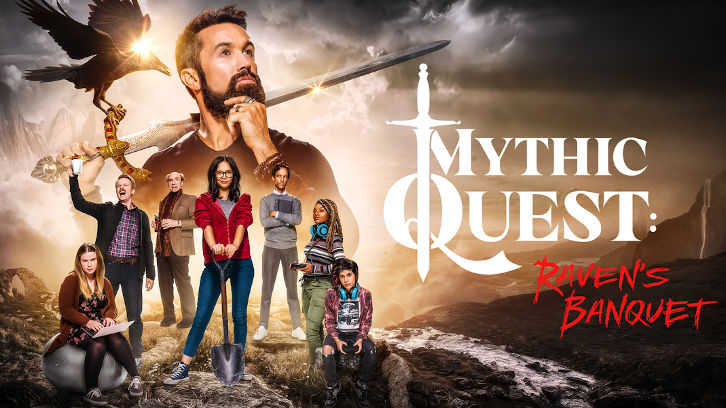
Mythic Quest is a work-based sitcom a la Sports Night or Ted Lasso, though I think it might be most similar to Silicon Valley.[1] The show follows a company that maintains an MMORPG (think World of Warcraft or Everquest, etc.). The jokes range from fairly inside video games to stuff that anyone could understand. The cast is great, and I think Danny Pudi absolutely kills. Yet…two things fall flat for me.
The first, and perhaps less interesting[2] thing that doesn’t quite work is that the characters lack the dynamism present in Ted Lasso (and other great shows). The game’s creative director, Ian, spends the whole first season being a sociopathic megalomaniac, with few signs of redemption. Contrast this with Ted Lasso, where every single character on the show not only shifts in the first season, but we as an audience are given hints and hope that this will be the case. Clearly, as we round into the second season, he and others will have to change or the show will get exceedingly dull, but there’s been little work on the part of the show to even give us hope that Ian or others will actually change.
The second thing (the more interesting one!)[3] starts with a series of events in SLOCG and Ted Lasso that subverted my expectations:
- When Whitney’s teammates find out that she had an affair with her assistant coach, they blame him and support her (SLOCG).
- When Leighton finds out Kimberly has been sleeping with her brother in secret, she blames her brother, not Kimberly (SLOCG).[4]
- More subtle, but in season one of Ted Lasso, Keeley and Rebecca start to build this beautiful, if fragile friendship. In episode seven Rebecca’s old friend Sassy comes to town. Normally, this is when the old friend and the new friend collide, usually with the old friend trying to drag the main friend back to their past (more destructive) ways. Instead, we get this beautiful series of episodes where they all become even closer and support each other.
So why does this matter? I think I’ll use a scene from Mythic Quest to try and explain. It’s quick, and seemingly innocuous, but the lead developer, Poppy (a woman) is ignored by the creative director (Ian) and the head of monetization (Brad) as they feign a coughing fit. It’s played for laughs—ohhh, hahah, look at this parody of how women are ignored in the workplace. Similar events occur a few times in the first season. It’s a parody, I get it.
Except…it’s real. And I worry that when we parody moments like this, it gives some license to the viewer to accept that behavior—like, this show is confirming that this happens, so if it also happens in my life, oh well.
Whereas SLOCG and Ted Lasso subvert expectations around misogyny and open possibilities for brand new behavior. And they’re still funny! Plus, it’s what I want my television to do: subvert my expectations, surprise me, and open up new ways for me to think about the world.
[1] And not documentary-style like The Office, Parks & Rec, Abbott Elementary etc.
[2] In writing you always start with your least interesting points, right?
[3] One depressing way to do writing is to label everything you write “interesting!” and “not interesting…(sad face)”
[4] Yes, I did have to google almost every single one of these names to remember them.
 The Minimum Blues
Leave a comment