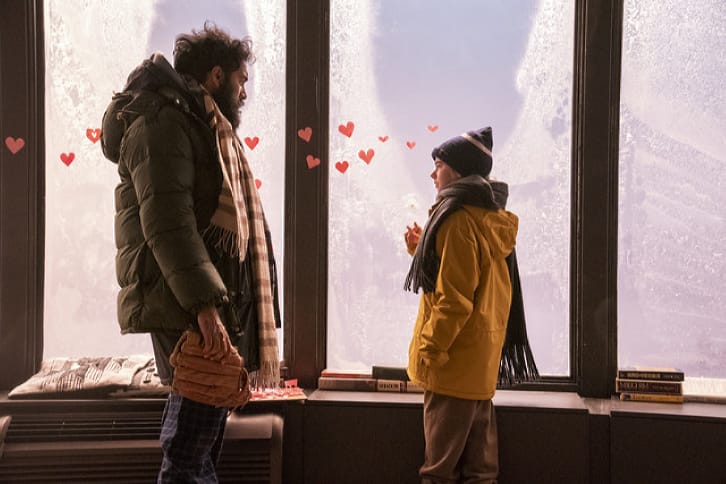
If you had asked me what it would take to get me to watch a post-apocalyptic television show following a global pandemic, I don’t know what I would have said two weeks ago. Now, the answer is clear: a show as good as Station Eleven.
Station Eleven is an HBO show adapted from Emily St. John Mandel’s novel of the same name, originally published in 2014. Checking goodreads, it looks like I read it almost exactly seven years ago. I gave the book four stars, but to be honest, I don’t remember enjoying it that much.
Let’s disperse with hyperbole first:
- As I mentioned earlier, I’ve shied away from any apocalyptic fiction since early 2020, and I’m guessing Station Eleven will be the only show to break that mold.
- It’s my favorite single season of television since (at least) the first season of True Detective, which I’ve watched ~5 times.
- It’s so good, it made me want to (figure out how to) read Shakespeare.[1]
- I ugly cried for most of the last episode and I’m okay with that.
So…what makes this show great? (all major spoilers will be in the footnotes)
- This show isn’t really about the pandemic. Sure, it serves as the launching event for the plot, but the show is about so many other things, and really hinges on the relationships between people.
- I love the way that the show considers how we come together,[2] what’s ultimately important in life/the importance of art, what adults and children owe each other, and probably five other themes I’ll get in a re-watch.
- Station Eleven is not cruel in the way that most “prestige TV” of the past twenty years has come to be. In an interview on The Watch, showrunner Patrick Somerville said that (paraphrasing) he felt like they could innovate by creating post-apocalyptic fiction that wasn’t focused on killing people after the apocalypse.[3] Like—we’ve already killed a significant portion of the people on the planet, maybe we don’t need to keep doing that. It also avoids the faux “hard reality” of shows like The Sopranos, Mad Men, The Wire, and Breaking Bad, where even the funny moments had to come from cruelty.[4]
- The music is super-fucking-dope, and this moment (spoiler) was exceptionally joyous and cathartic.
- The show is just so damn tight. Every moment is for a reason. Every look is for a reason. What feels tossed off in episode one or two pays off in episode eight or nine. A few examples in this footnote.[5]
[1] Ed: not actually going to do this.
[2] “she’s just someone I ended up with”
[3] Clear exception with the kids at the golf course.
[4] My wife pointed out that Station Eleven is much closer in spirit to the first few seasons of Lost than any of these.
[5] Miranda is in logistics so she can save the people in the Severn City Airport. Alex is the baby whose mom dies, Tyler is the boy who comes (too late) to check on her. We don’t have to watch Jeevan and Kirsten catch up in the finale because we already know what they’d tell each other. Jeevan becomes a doctor after twice imitating one, and after struggling to describe to Kirsten what he does as a job. Jeevan (unintentionally) honors his dead siblings by using a cane and becoming a doctor. The Independence Day speech. Tyler’s distrust of adults from his experience as a kid. The way the show is able to integrate Hamlet so that someone like me who only knows the bones of the story can appreciate the play in the last episode as each line carries dual or triple meanings. The water slide where Kirsten meets the prophet is the same one she saw when she was younger w/Jeevan, with the implication that the wheel is about potentially seeing him again.

 The Minimum Blues
Leave a comment