- Tiny Habits by B.J. Fogg
There’s a lot to love about this book, and I’ll share a longer post about this in the new year, but for me the biggest distinction Fogg makes is around motivation and willpower. Here’s his basic point: “People are always looking for ways to ramp [motivation and willpower] up and sustain them over time. The problem is that both motivation and willpower are shape-shifters by nature, which makes them unreliable.” (9) Instead, Fogg says, we should focus on our (or others’) ability to do something. Tiny Habits had me thinking differently about myself, the people I’ve coached, and basically everyone I know.
- Wilmington’s Lie by David Zucchino
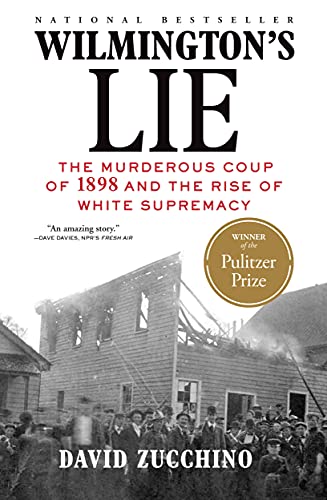
This book is an absolute must-have piece of North Carolina history that many people, myself included, did not learn about during school.[1] David Zucchino[2] lays out what happened in Wilmington with great detail, and like great histories do,[3] he helps explain why things happened in the past and shows you the link to why they are how they are in the present.
- An Indigenous People’s History of the United States by Roxanne Dunbar-Ortiz
This book is a brutal read, but brutal doesn’t begin to describe the history of this country. The quote that has stuck with me the most:
“Neither superior technology nor an overwhelming number of settlers made up the mainspring of the birth of the United States or the spread of its power over the entire world. Rather, the chief cause was the colonialist settler-state’s willingness to eliminate whole civilizations of people in order to possess their land.” (96)
Dunbar-Ortiz then quotes British novelist D.H. Lawrence, about the myth of the United States: “You have there the myth of the essential white America. All the other stuff, the love, the democracy, the floundering into lust, is a sort of by-play. The essential American soul is hard, isolate, stoic, and a killer. It has never yet melted.” [emphasis mine]
- The Premonition by Michael Lewis
Credit to Michael Lewis that he’s such a good storyteller he got me to read a book about the pandemic. My highlight is the story of how the modeling for how to prevent a disease from spreading was invented by a middle-schooler for her science fair project.[4]
- Popular Crime by Bill James (re-read)
- The Man From the Train by Bill James & Rachel McCarthy James
A rather remarkable story where Bill James and his daughter Rachel McCarthy James solve a 100+ year-old serial killer murder mystery through journalism. I really enjoyed it, though friends were put off by the audio book’s narrator.
- Press Reset by Jason Schreier
- The Fifth Risk by Michael Lewis
- The Body Keeps Score by Bessel van der Kolk
Probably every educator, parent, and people who care for other people should read this book. It’s a pretty comprehensive overview about how trauma lives in the body, how it shows up in our lives, and what potential treatments are. It was tough to pick just one quote here, but I’ll give it a shot:
“He had calculated that [childhood trauma’s] overall costs exceeded those of cancer or heart disease and that eradicating child abuse in America would reduce the overall rate of depression by more than half, alcoholism by two-thirds, and suicide, IV drug use, and domestic violence by three-quarters. It would also have a dramatic effect on workplace performance and vastly decrease the need for incarceration.” (150)
- My Grandmother’s Hands by Resmaa Menakem
Honorable Mentions: Furious Hours by Casey Cep, Caste by Isabel Wilkerson
[1] I was, however, taught in the 8th grade that the Civil War was about states’ rights. So there’s that.
[2] Disclaimer, I guess: I’ve met David, he’s the uncle of one of my best friends. We had a lovely dinner together once and for a Pulitzer winner he’s pretty fucking down-to-earth. Food was good too.
[3] I am very qualified to make this statement. Okay…not really, but shouldn’t they do this?
[4] She didn’t even win!
 The Minimum Blues
Leave a comment