This is a short list of my favorite novels I read in 2021 (not necessarily released this year). I’ll add a short blurb if I have anything insightful to say about the book, but I’m not a literary critic and I struggled in all of my (3) college English courses so you can take everything here with a pebble of salt.
- Cloud Atlas by David Mitchell (re-read)
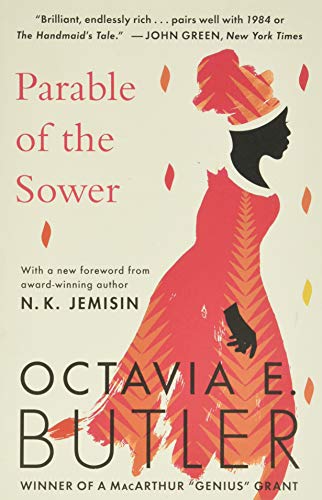
- Parable of the Sower by Octavia E. Butler
Great books do things to you. I don’t know whether I’m glad for what this one did to me (I’d describe myself as a pre-prepper for a few months. I researched survival books, almost bought a flint for starting fires, and made ill-fated plans with a friend to learn how solar panels work so we could build our own), but I’m glad I read it. As prescient as The Overstory is/was, this one is all the more amazing because of when it was written, as Octavia E. Butler gets right way too many of the details of our modern and coming lives.[1]
- The Ten Thousand Doors of January by Alix E. Harrow

This was as lost in a piece of fiction that I think I was this year. It made me feel like a kid again, and Harrow told a story of epic proportions in one volume. Magical. Like…read this paragraph:
I found it on the raggedy western edge of Kentucky, right where the state dips its toe into the Mississippi. It’s not the kin of place you’d expect to find anything mysterious or even mildly interesting…The sun hangs twice as hot and three times as bright as it does in the rest of the country, even at the very end of August, and everything feels damp and sticky…But Doors, like murder suspects in cheap mysteries, are often where you least expect them (3).
I don’t know…I read that and I’m entranced. And it happens over and over again. Highly recommend.
- Jitterbug Perfume by Tom Robbins (re-read)
- Assassin’s Apprentice by Robin Hobb
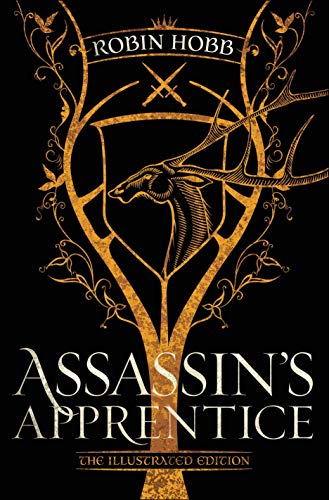
Unbeknownst to me until this year, an important part of the canon for fantasy novels, and for good reason. A huge influence on George R.R. Martin, and if you enjoyed A Song of Ice and Fire (ASOIAF) you owe it to yourself to read this (I’m not going to say George R.R. Martin stole from this book…but he definitely borrowed).
- The Sandman (Series) by Neil Gaiman
This is really a series of comic books collected in 14 volumes. It was an intense undertaking (inspired by the upcoming HBO series) that I think I’m still processing.
- The Overstory by Richard Powers
If this were just the first section of the book, it would be a clear #1 for me and the best thing I’ve read in years. I read the first section and started calling people about it. And then the second two sections…they’re not bad. It’s just that the first is transcendent and the next two are above average. But go read the first ~200 pages. Then I’d say you can treat it like the later seasons of Lost—if you’re enjoying it, keep reading. If not, don’t feel bad about putting it down.
Okay I wrote all that and I forgot to say what I loved about it. Two things, in particular: First, the characters are so quickly, deftly, and lovingly crafted. The book has a propulsion to it, but as quickly as it moves, the characters move with us, and the details are so painstaking pieces of it read more like a biography meticulously researched by David McCullough than a work of fiction. Second, starting with the story of the Chestnuts, Powers blew my mind about trees. I just cannot overstate how amazing it is to have fundamentally changed the way I think about these beings I’ve been around my whole life. It’s such an accomplishment—not only the research, but the way it’s written that the trees themselves become characters you laugh and cry over. I love trees more than I ever have, despite writing this in the middle of a season where I spend hours each weekend dealing with their leaves.
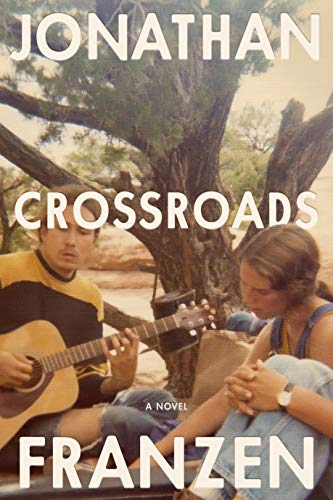
- Crossroads by Jonathan Franzen
My favorite Franzen since The Corrections. As a friend and I texted: no songbirds! In all seriousness, what’s great about this novel? Franzen is able to pick apart the characters, their motivations, and where they come from with microscopic detail. It is a magic trick that we expect of all authors: create fully formed characters as if they were full people like the ones in our own lives.[2] It is a magic trick that few authors pull off, and even fewer do so with coherence.
- The Once and Future Witches by Alix E. Harrow
- The Darkness that Comes Before by R. Scott Bakker
I write this as I read the second book in this series, and it’s hard to imagine not reading the third. So what’s compelling here, given these are about 600 pages a pop? I think Bakker takes some of my favorite elements of what was great about the Song of Ice and Fire series, and leaves some of what I didn’t care for. The slow piecing together of the past through present political maneuvering to create the world. Maybe this isn’t as popular because it lacks the action of ASOIAF. They’re also difficult books, not really in the vocabulary sense, but he created a fully formed world and doesn’t wait for you to figure it out. He’s going to show it to you through hints and clues, rather than telling you it secrets. I know he’s setting up conflicts hundreds of pages in advance, but I have no clue where it’s heading.
So why isn’t this higher? Well…the dude doesn’t write or represent female characters well/at all. To the point where I don’t think this gets by and editor or publisher today. There are a number of viewpoints you get to see in the novel (between 5 and 10?) and the only female one is from a whore. So…yeah. Got to do better here.
Honorable Mentions: The Seven and a Half Deaths of Evelyn Hardcastle by Stuart Turton, The Sympathizer by Viet Thanh Nguyen
[1] Also, the story is good.
[2] I may be giving us too much credit. We rarely see whole people even in real life, and often rely on fiction to do some of that work for us.
 The Minimum Blues
Leave a comment